


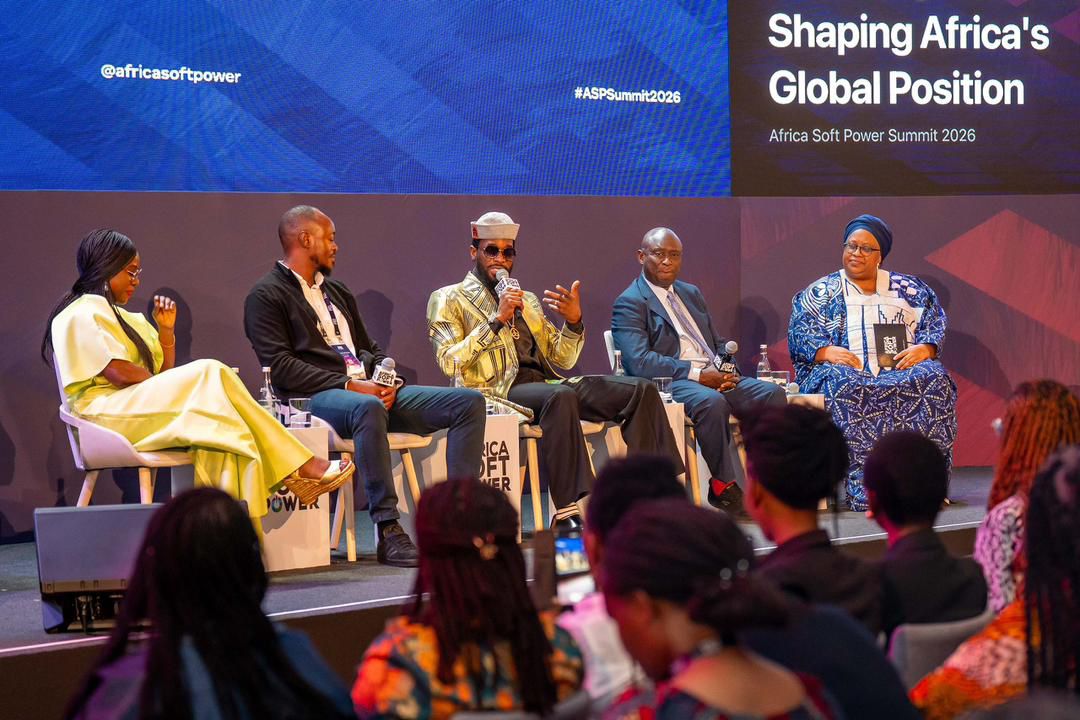
At the Africa Soft Power Summit 2026 in Nairobi, the conversation was bigger than who wore what, who gave a fire speech, or who got the loudest applause.
It was about what African creatives do next.
Let’s be honest. African culture is already everywhere. Our music is global. Our films are travelling. Our fashion is influencing runways, even American prom culture. Our actors, influencers, designers, comedians and storytellers are moving numbers online every day.
But the question the Africa Soft Power Summit 2026 put on the table was simple: after the visibility, who owns the value?
That is why the Bolanle Austen-Peters, Rita Dominic and D’banj conversation matters.
Bolanle Austen-Peters is not just a theatre champion. She is proof that creativity can become infrastructure. Through Terra Kulture, BAP Productions, stage plays, films, training, production systems and jobs, she has shown that African storytelling can become a full value chain. Her Terra Academy for the Arts has also trained over 60,000 young people for the creative industry.
Her point was clear: the creative economy is not vibes. It is business. It creates jobs, supports fashion, hospitality, tourism, production, media, design and several other sectors. But for it to scale, financiers need to stop treating creativity as a soft or unclear sector and start understanding the business models behind it.
Rita Dominic brought the conversation closer to Nollywood and to every public-facing creative who has ever had visibility without control.
Rita is not just an actress. She is a filmmaker, producer and Co-Founder of The Audrey Silva Company. She has seen Nollywood move from the DVD era to streaming and global platforms. Her point was simple but powerful: visibility can open doors, but ownership is what keeps value in your hands.
During the DVD era, Nollywood actors became famous across Africa, the diaspora and the Caribbean. But the people who controlled the business were often the marketers, gatekeepers and executive producers. Streaming later gave Nollywood global reach, but it also created a new problem: data. If creators do not have access to the backend numbers, how do they know their value? How do they negotiate properly?
That is why Rita’s line hits hard: visibility gets you hired, but ownership gets you paid for life.
For actors, actresses, influencers and public-facing creatives, the product is not only the film, song or post. Sometimes the product is the face, style, voice, image, trust and audience. But if you do not own the platform, the IP, the catalogue, the production company, the data or the business behind that visibility, the real value may still sit elsewhere.
Then D’banj brought the conversation into music, IP and capital.
D’banj is not just a hitmaker. He is also the Founder and CEO of The C.R.E.A.M Platform, a creative enterprise built to help discover, support and monetise African talent. From music to entertainment business, brand partnerships, platform building and continental relevance, his career shows how an artist can move from performance into cultural enterprise.
His point was also very direct: creators are celebrated socially, but questioned commercially. A bank may welcome you, take pictures with you and tell you how much their family loves your work. But once you ask for funding, the question becomes: where is your collateral?
For D’banj, the answer is IP.
That is the part many creatives miss. Your catalogue is an asset. Your character can become an asset. Your format can become an asset. Your audience can become an asset. Your platform can become an asset. But only if it is structured, protected and understood as a business.
Together, their presence at the ASP Summit in Nairobi gave creators a clear message: the next era is not only about talent. It is about structure.
And now AI don enter the chat.
AI can help creators produce cheaper, test ideas, translate content, create visuals, analyse audiences and scale stories across markets. But AI also raises another big question: if your voice, image, script, sound, face or creative style becomes data, who controls it?
That is why African creators need to move from posts to ownership. From followers to formats. From skits to IP. From songs to catalogues. From influence to equity. From “I have numbers” to “I have a business investors can understand.”
And the interesting thing is, money is looking at this space. Across Africa, more investors, platforms, funds, banks and development institutions are paying attention to the creative economy, tech, AI, fashion, film, music, gaming and creator-led businesses.
But capital does not usually chase vibes alone. It follows models, rights, audiences, revenue, distribution and serious ambition.
That was the Africa Soft Power Summit’s point.
The creator economy is no longer just about being seen. It is about being bankable.
So for actors, influencers, filmmakers, musicians, stylists, writers, producers, content creators and creative founders, the next big thing may not be another viral post.
It may be the company behind the post.
The IP behind the character.
The platform behind the audience.
The catalogue behind the sound.
The system behind the talent.
At ASP Summit in Nairobi, Bolanle Austen-Peters, Rita Dominic and D’banj reminded everyone that African soft power is sweet, but ownership is sweeter.

