


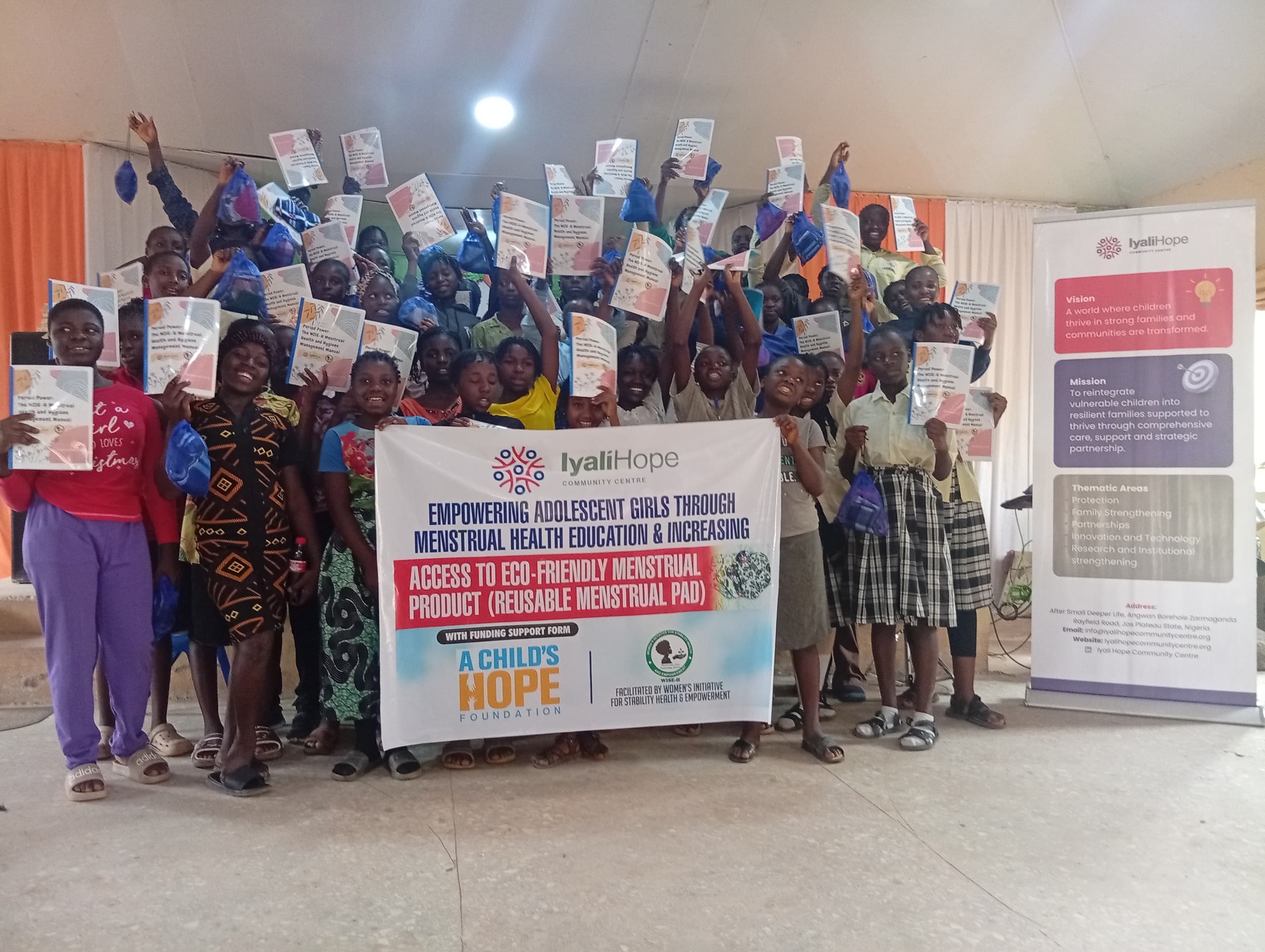
In a bid to promote sustainable menstrual hygiene and environmental sustainability, Women’s Initiative for Stability, Health and Empowerment (WISE-H) has trained 50 adolescent girls drawn from two shelters in Plateau State on the production, use and maintenance of reusable menstrual pads.
The training was facilitated through the IYALI Hope Community Centre (IHCC) with funding support from A Child’s Hope Foundation.
The programme, held at the Jos Christian Refuge for Children Foundation (JCRFCF) in Jos, equipped participants with practical skills in making reusable menstrual pads and educated them on proper menstrual hygiene management.
The organisers also distributed specially designed training manuals tailored for adolescents to enhance their understanding of menstrual health and hygiene practices.
At the end of the programme, each participant received a pack of reusable menstrual pads, a storage bag and a training manual to support continued learning and application of the skills acquired.
Speaking during the training, the Lead Facilitator, Mrs. Oluwaseyi Anreti Adeolowu, stressed the need for greater adoption of environmentally friendly menstrual products.
According to her, disposable sanitary pads contribute significantly to environmental degradation and climate-related challenges.
“The time to embrace eco-friendly products, especially during menstruation, is now. The percentage of waste generated from disposable pads is enormous and contributes significantly to climate change, environmental pollution and drainage blockage,” she said.
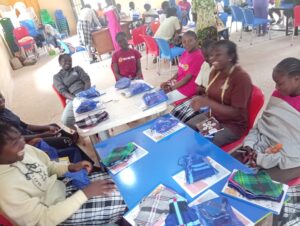
Adeolowu explained that reusable menstrual pads offer a sustainable alternative that not only reduces waste but also provides a cost-effective solution for young girls and women.
She added that the initiative was designed to empower adolescent girls with practical life skills while promoting healthy menstrual practices and environmental responsibility.
Also speaking, the Assistant Director of Jos Christian Refuge for Children Foundation, Mrs. Mary Choji, commended the organisers for the intervention.
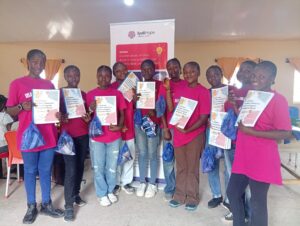
She said the training had improved the knowledge of the girls on menstrual hygiene and provided them with practical skills that would benefit them in the long term.
“We are grateful for this training, which has improved the knowledge of the girls in our home on menstrual hygiene and the production of reusable pads.
“The provision of these reusable pads will enable the children to experience the benefits of eco-friendly products,” she said.
The programme forms part of ongoing efforts by WISE-H and its partners to improve menstrual health education, promote environmental sustainability and empower vulnerable adolescent girls with practical skills for healthier living.

